ISSN |
|---|
E-ISSN: 3163-7051 |
|
Barcode  |
P-ISSN: 3125-0920 |
|
Barcode  |
|
|
Author Template |
|---|
Coming Soon |
|---|
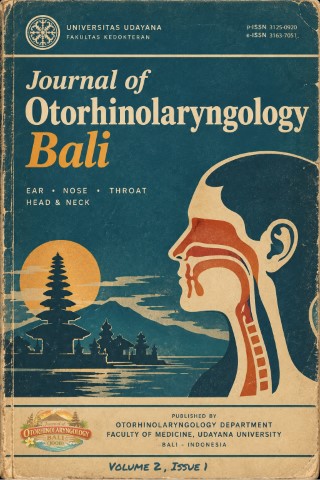
Volume 2 Nomor 1 |
 |
Submissions
Login or Register to make a submission.
Submission Preparation Checklist
As part of the submission process, authors are required to check off their submission's compliance with all of the following items, and submissions may be returned to authors that do not adhere to these guidelines.
Submission Flow

1. Guidelines for research report
2. Guidelines for Case Report
Case report is written using an evidence-based case report (EBCR) method. The maximum should be 15 pages, consists of Title; Writer’s name; Abstract (in English) consists of background, purpose, case report, method, result, and conclusion; Introduction is written briefly (1-2 pages) and the last paragraph contains the purpose of the case report; Case Report; Clinical Question using PICO format (Problem, Index/Intervention/Indicator, Comparison, and Outcome); Method explain the detail of evidence seeking steps covering sources, keywords of seeking evidence, inclusion and exclusion criteria; Result should be narrated and supported by table, and flowchart of critical evaluation of the chosen articles. Discussion ended by conclusion dan suggestion, in the last paragraph; Reference written according to Vancouver Style. The maximum number of references is 30.
 Download Example for Case Report
3. Guidelines for Literature Review
Literature Review should have a maximum of 15 pages, consists of: Title; Writer’s name; Abstract (in English and Indonesian), structured with background, purpose, reference and conclusion; Introduction, should be brief (the last paragraph contains the purpose of the presence of this review); Literature Review; Discussion ended by a conclusion in the last paragraph. Reference, written according to Vancouver Style. The maximum number of references is 30.
Download Example for Literature Review
4. Guidelines for Reference
Reference written based on the rules of Vancouver Style. The reference is identified inside the article by serial numbers which written according to the subsequent numbers complying with the presence in the article. All writer’s names are written on the list, should it be more than 6 writers, only the 6 names are written, followed by et al. The preferred references are published in the last 5 years.
It's easier to use the Mendeley program. Below are Guidelines for Reference.
Download Guidelines for Reference
Subject consent forms
Subjects have a right to privacy that should not be infringed without informed consent. Identifying details (written or photographic) should be omitted if they are not essential, but subject data should never be altered or falsified in an attempt to attain anonymity. Complete anonymity is difficult to achieve, and a consent form should be obtained if there is any doubt.
Ethics committee approval
Authors must sign a declaration that the research was conducted within the guidelines below and under the terms of all relevant local legislation. Please also look at the latest version of the Declaration of Helsinki. The Editors reserve the right to judge the appropriateness of the use and treatment of humans or animals in experiments for publication in the journal.
Human experiments: All work must be conducted in accordance with the Declaration of Helsinki. Papers describing experimental work on human participants which carries a risk of harm must include (1) a statement that the experiments were conducted with the understanding and the consent of each participant, and (2) a statement that the responsible, ethical committee has approved the experiments.
Animal experiments: In papers describing experiments on living animals, include (1) a full description of any anaesthetic and surgical procedure used, and (2) evidence that all possible steps were taken to avoid animals' suffering at each stage of the experiment. In experiments involving the use of muscle relaxants, describe the precautions taken to ensure adequate anaesthesia.
Experiments on isolated tissues: Indicate precisely how you obtained the donor tissue. The NIH guide for the care and use of laboratory animals (National Institutes of Health Publications No. 80-23, revised 1978) gives guidelines for the acquisition and care of animals.
Journal of Otorhinolaryngology Bali (JOOB) is an open access journal that does not charge readers or institutions for access. There is no fee for manuscript submission. However, this journal charges an article publication fee of IDR 300,000 for Indonesian people and USD 30 for other country for all types of manuscripts. Once the accepted manuscript has been proofread by the authors, the JOOB office will send an invoice to the corresponding author, who must complete the payment process before the article can be published.
Payment instructions will be sent to the corresponding author after the manuscript is accepted and proofread.
Authors are expected to uphold the integrity of scientific publishing. They must:
ISSN |
|---|
E-ISSN: 3163-7051 |
|
Barcode |
P-ISSN: 3125-0920 |
|
Barcode |
|
|
Author Template |
|---|
Coming Soon |
|---|
Volume 2 Nomor 1 |
| |
ABSTRACTING & INDEXING |
|---|
 |
|
Plagiarism Screening |
|---|
 |
Reference Management Tools |
|---|
 |
 |
Visitors |
|---|
| |
Journal Archiving Policy |
|---|
 |
 |
| Journal of Otorhinolaryngology Bali (JOOB) |
|---|
| Logo | Company | Contact Person |
|---|---|---|
 |
Department of Otorhinolaryngology - Head and Neck Surgery, Faculty of Medicine, Universitas Udayana.(Gedung Cempaka Lt. 4, RSUP Prof. Dr. I.G.N.G. Ngoerah Jl. Diponegoro, Denpasar-Bali Telp. (0361) 244574; Fax: (0361) 244574) | dr.Ketut Tadeus Max Nurcahya Pinatih Sp.T.H.T.B.K.L |
 |
Bali Association of Otorhinolaryngology Head and Neck Surgery (ORL-HNS Bali) | Email: max.nurcahya@unud.ac.id |
 |
Atribusi 4.0 Internasional |
Phone : +628179733055 |
| Since 2026 |
|---|