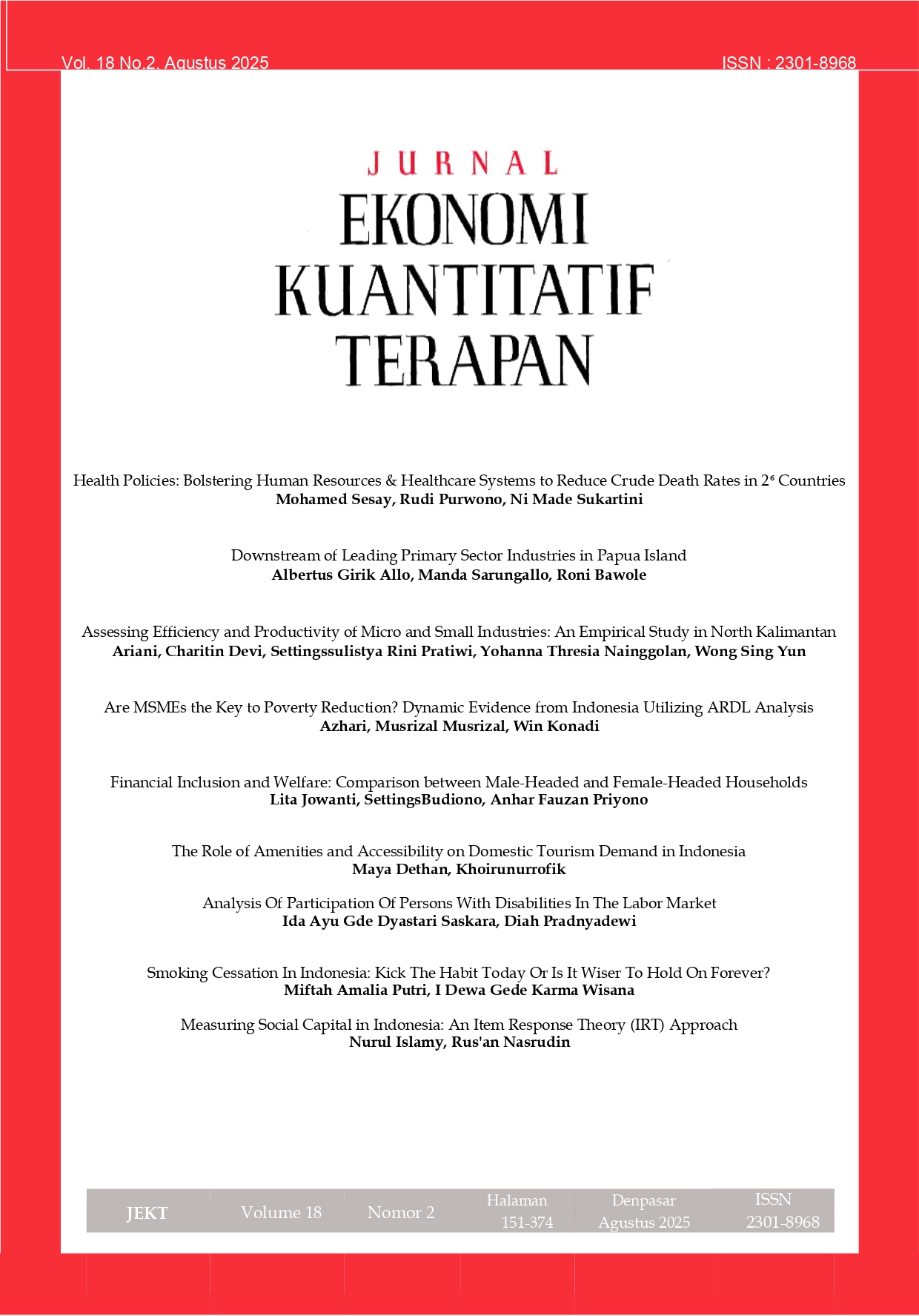
Smoking Cessation In Indonesia: Kick The Habit Today Or Is It Wiser To Hold On Forever?
DOI:
https://doi.org/10.24843/JEKT.2025.v18.i02.p08Keywords:
healthcare expenditure, smoking cessation, smoking-related diseaseAbstract
Smoking substantially adds to chronic illnesses and healthcare expenditures. Current smokers typically incur substantial annual costs, whereas former smokers have distinct health hazards associated with their previous tobacco consumption. This study utilizes IFLS data (2007–2014) to examine healthcare expenditures between current and former smokers in Indonesia. This study used propensity score matching (PSM) to mitigate sample selection bias in smoking cessation. Research indicates that smoking status substantially influences healthcare expenditures, with former smokers facing elevated costs—presumably due to the delayed emergence of smoking-related diseases. Significant determinants affecting smoking cessation encompass age, educational attainment, chronic disease, and body mass index (BMI). Simultaneously, active lifestyles and increased expenditure are associated with persistent smoking habits. These findings underscore the necessity for specialized post-cessation assistance and customized tobacco control programs that account for individual variances.
Downloads
Published
Issue
Section
License
Copyright (c) 2025 Jurnal Ekonomi Kuantitatif Terapan

This work is licensed under a Creative Commons Attribution-NonCommercial 4.0 International License.

This work is licensed under a Creative Commons Attribution 4.0 International License.