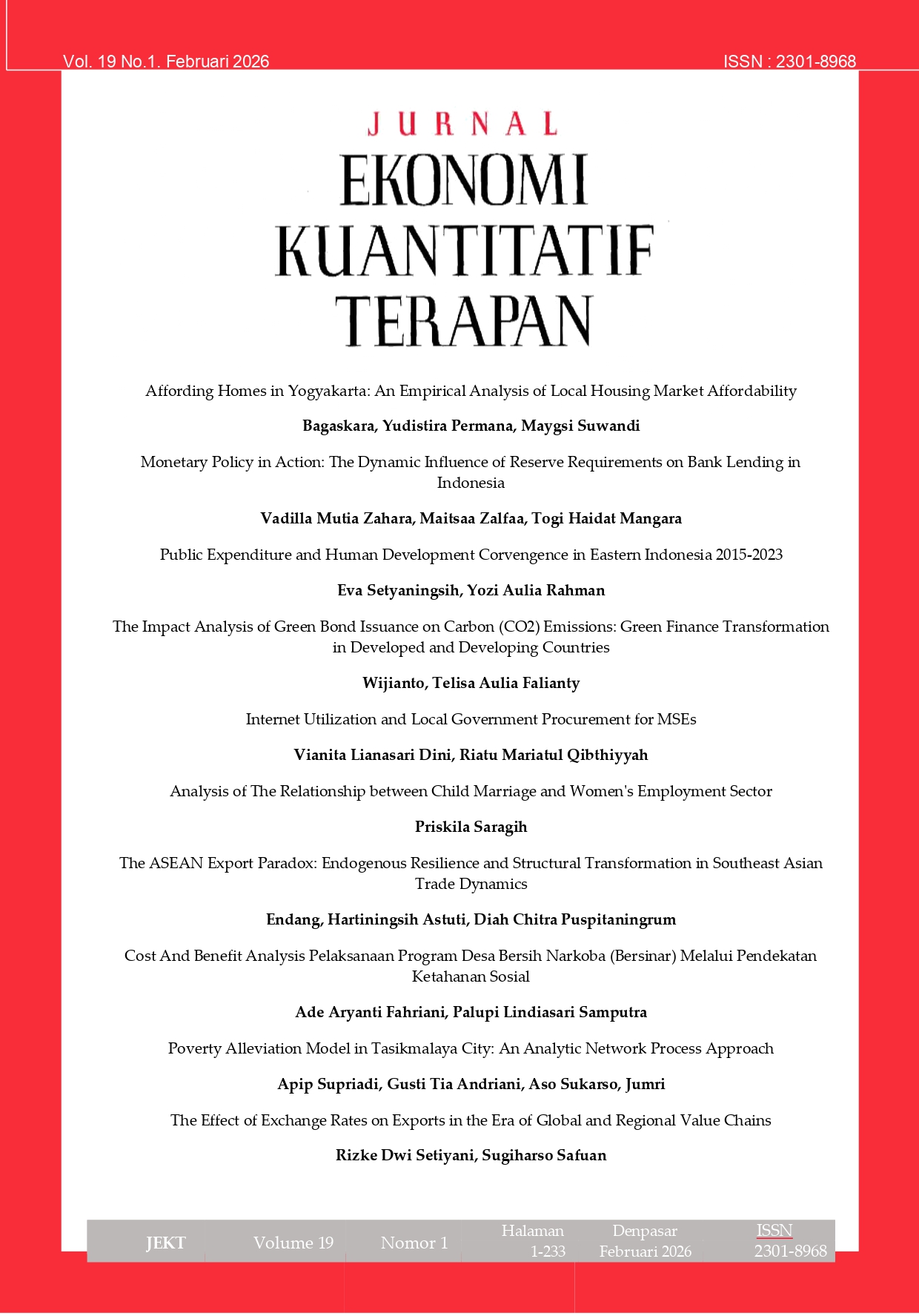
Monetary Policy in Action: The Dynamic Influence of Reserve Requirements on Bank Lending in Indonesia
DOI:
https://doi.org/10.24843/JEKT.2026.v19.i01.p02Keywords:
Monetary Policy, Reverse Requirement, BI Rate, Credit, SYS – GMMAbstract
Bank Indonesia enforces the Statutory Reserve Requirement (RRR/GWM) as a key monetary policy instrument aimed at maintaining liquidity stability within the banking system. This policy plays a crucial role in regulating the amount of funds banks can allocate to society through credit distribution. This study examines the impact of Reserve Requirements (RRR/GWM), Gross Domestic Product (GDP), inflation, bank size, the BI Rate, and third-party funds on bank credit. A dynamic panel data analysis is conducted using the System Generalized Method of Moments (SYS-GMM) approach to address potential endogeneity bias. The sample consists of 42 conventional banks listed on the Indonesia Stock Exchange (IDX) from 2014 to 2023. The results indicate that an increase in Reserve Requirements, bank size, the BI Rate, and third-party funds positively and significantly influences credit distribution. In contrast, GDP and inflation exert a negative and significant impact on bank lending. These findings highlight the crucial role of monetary policy in shaping banking dynamics, particularly in credit allocation. The policy implications derived from this study provide valuable insights for regulators in designing more effective liquidity management strategies in the future.
Downloads
Published
Issue
Section
License
Copyright (c) 2026 Jurnal Ekonomi Kuantitatif Terapan

This work is licensed under a Creative Commons Attribution-NonCommercial 4.0 International License.

This work is licensed under a Creative Commons Attribution 4.0 International License.